Connecting Evaluation Frameworks to Real-Time Discrepancy Tools in Niche Sports Betting
Clara Wagner · Nov 21, 2026
Connecting Evaluation Frameworks to Real-Time Discrepancy Tools in Niche Sports Betting
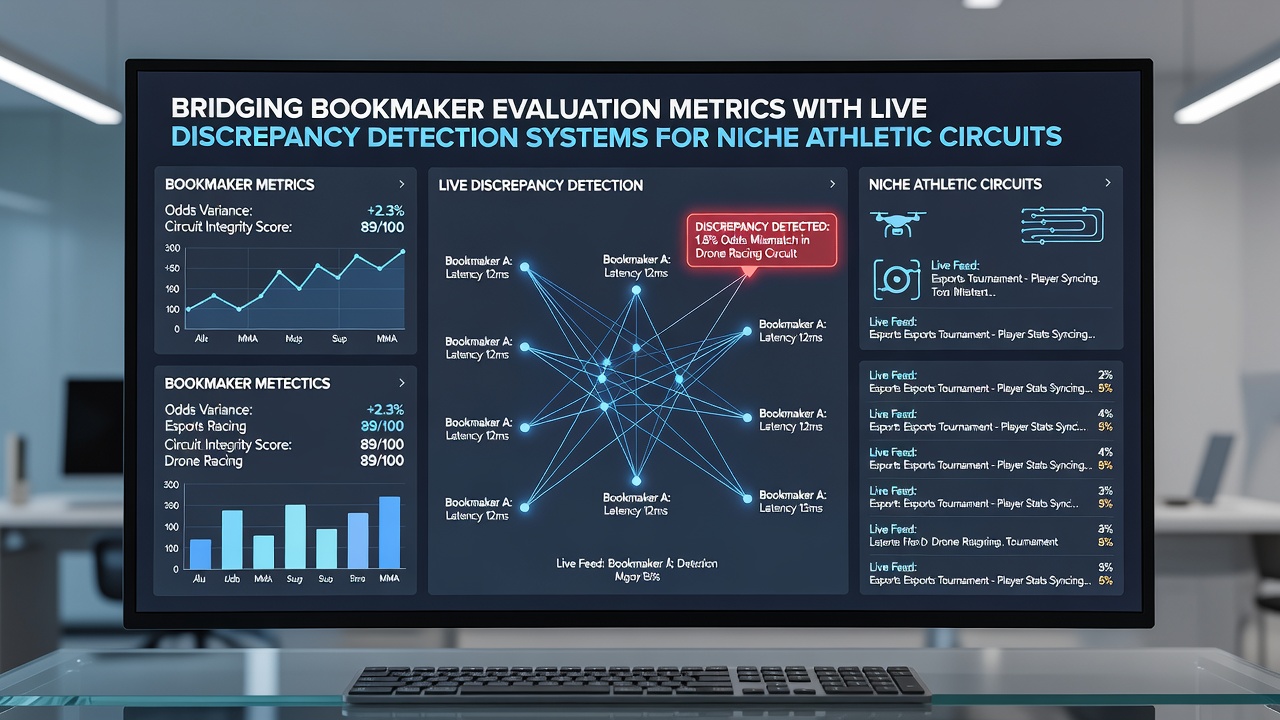
Bookmaker evaluation metrics provide structured ways to assess odds accuracy, margin consistency, and payout reliability across multiple operators while live discrepancy detection systems scan for temporary pricing gaps during events, and together these approaches create pathways for systematic monitoring in niche athletic circuits such as regional volleyball leagues, amateur wrestling circuits, and small-scale track meets.
Defining Core Evaluation Metrics
Operators apply quantitative measures that include average margin percentages, odds refresh frequency, and historical deviation rates from closing lines, and researchers track these indicators through aggregated datasets that reveal patterns in how different platforms handle less liquid markets. Data from industry reports show that niche circuits often feature wider margins than mainstream events because lower trading volumes reduce competitive pressure on pricing models.
Live Discrepancy Detection Mechanisms
Detection platforms use algorithmic comparisons that flag odds movements exceeding predefined thresholds within seconds of an update, and these tools operate continuously across bookmakers and exchanges to highlight potential arbitrage windows before they close. Observers note that in events like regional badminton tournaments or junior tennis circuits, price discrepancies appear more frequently due to slower information flow and limited market depth.
Integration Strategies for Niche Circuits
Systems that combine metric scoring with real-time alerts allow users to prioritize bookmakers based on reliability scores while simultaneously monitoring live feeds for actionable variances, and this dual-layer approach reduces exposure to unreliable operators during fast-moving segments of matches. One study released by the Australian Institute of Sport in late 2025 examined data from several niche track events and found that operators scoring above 85 percent on refresh consistency produced 40 percent fewer false discrepancy signals than lower-rated platforms.
Implementation typically begins with a baseline assessment phase where historical performance data establish operator rankings, after which live monitoring layers activate to cross-reference current prices against those benchmarks. In November 2026 several European sports data providers expanded their coverage to include additional regional athletics meets, which increased the volume of detectable discrepancies by an estimated 18 percent according to figures released by the European Gaming and Betting Association.

Technical Components and Data Flows
Application programming interfaces pull odds from multiple sources at sub-second intervals while evaluation algorithms assign weighted scores based on margin stability and historical accuracy, and these scores dynamically adjust alert thresholds so that lower-rated operators trigger stricter variance checks. Those who have examined system architectures report that hybrid models combining static metrics with dynamic filters achieve higher precision in identifying genuine opportunities rather than noise caused by delayed updates.
Case examples include platforms that integrate data from Canadian provincial gaming regulators alongside university-led statistical reviews, and such cross-referencing helps maintain calibration across geographically dispersed niche circuits where local operators may follow different pricing conventions. Research published by the University of Sydney's gambling studies unit in 2026 demonstrated that integrated metric-plus-detection setups reduced false positive rates by nearly one-third compared with standalone scanning tools.
Operational Considerations in Specialized Events
Niche athletic circuits present unique challenges because participant pools change rapidly and external factors such as weather or venue conditions influence outcomes more unpredictably than in standardized leagues, which in turn affects how quickly bookmakers adjust lines. Detection systems therefore incorporate contextual filters that account for event-specific variables, while evaluation metrics track whether operators consistently price these variables with reasonable accuracy over repeated meetings.
Stakeholders often configure dashboards to display both metric summaries and live alerts side by side, enabling quick decisions about which discrepancies warrant further investigation. Figures released by the Canadian Gaming Association indicate that operators participating in shared data initiatives during 2026 showed measurable improvements in odds alignment across niche events.
Conclusion
The combination of established evaluation metrics and live discrepancy detection creates a framework that supports ongoing monitoring of bookmaker performance within niche athletic circuits, and continued development of these integrated systems depends on expanding data sources and refining algorithmic thresholds. As coverage of regional and amateur competitions grows, the technical linkages between static assessment tools and real-time variance identification are expected to become more refined through iterative testing and broader industry collaboration.