Global Platform Divergences Shape Layered Cricket Returns Through Exchange and Bookmaker Variations
Eden Griffin · Aug 23, 2026
Global Platform Divergences Shape Layered Cricket Returns Through Exchange and Bookmaker Variations
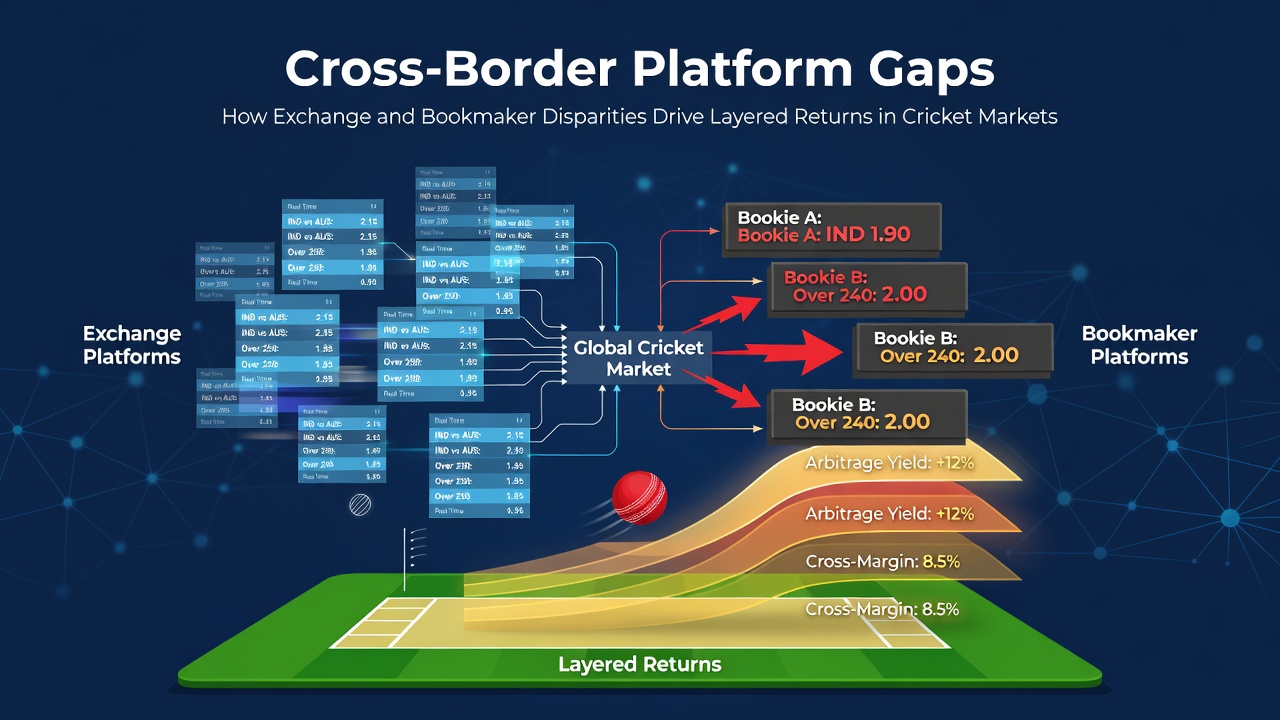
Cricket markets span multiple jurisdictions where exchanges and bookmakers maintain separate pricing models, and these differences create opportunities for layered positioning when participants align trades across platforms. Data from international cricket seasons shows that odds on major T20 and Test events often diverge by margins that allow simultaneous entries on one venue while offsetting exposure on another.
Platform Mechanics Behind Cross-Border Pricing
Betting exchanges operate peer-to-peer structures that adjust in real time based on matched volumes, whereas traditional bookmakers set fixed margins that reflect local regulatory costs and risk appetite. Observers note that during August 2026 series involving teams from England, India, and Australia, exchange liquidity pools in certain regions posted tighter spreads on player performance props compared with bookmaker lines in other markets. Those who monitor these feeds report that the resulting gaps appear most consistently in live markets where refresh cycles differ by several seconds.
Researchers tracking cricket data have documented how currency fluctuations and settlement rules add another layer of variation, since some platforms clear in local denominations while others convert at prevailing rates. This combination means participants can construct positions that capture incremental edges without relying on any single outcome.
Layered Strategies in Practice
Layered approaches combine an initial exchange lay with a bookmaker back at adjusted odds, then add secondary hedges on ancillary markets such as run totals or wicket counts. Studies of past IPL and international fixtures indicate that these stacked entries become viable when cross-border price differences exceed the combined commission and margin thresholds on both sides. Figures reveal that successful layering requires continuous scanner monitoring because gaps close rapidly once volume flows toward the lower-priced side.
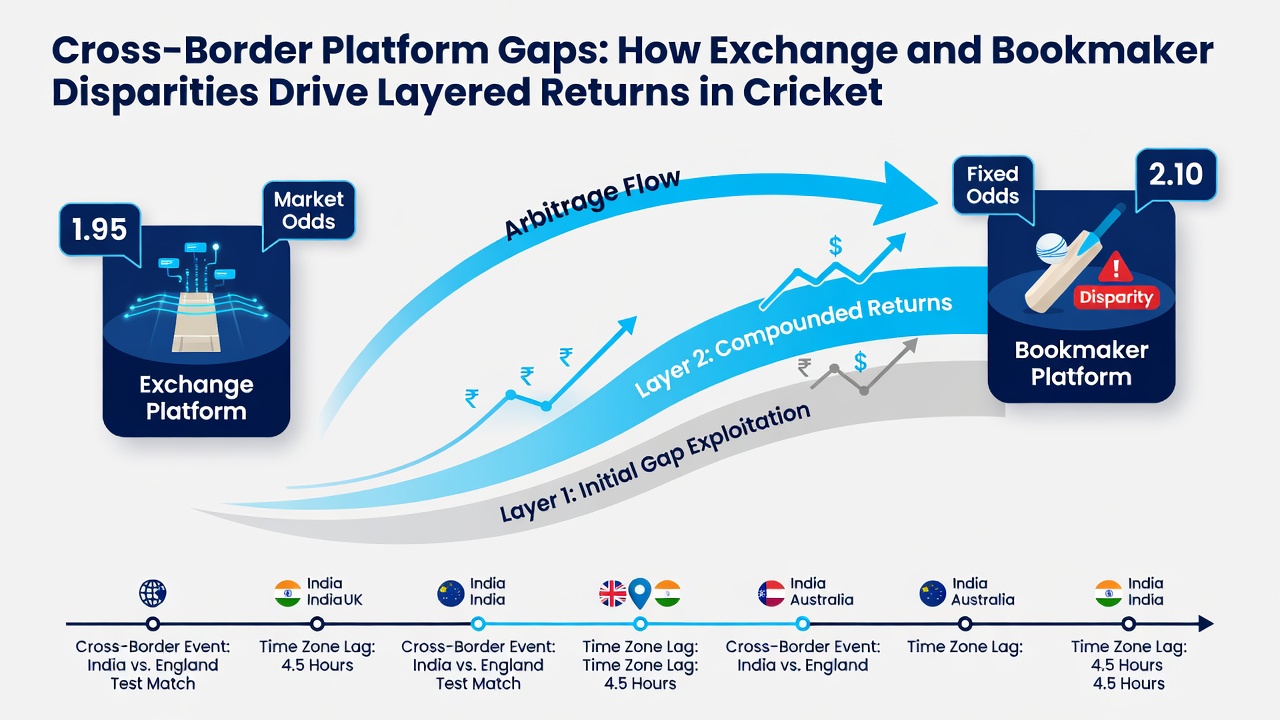
Take one documented case from the 2025-2026 bilateral series where exchange odds on a specific bowler’s economy rate sat noticeably below bookmaker quotes in a separate jurisdiction; participants who executed the primary trade then offset with a correlated over-under market achieved balanced exposure. Similar patterns emerged in limited-overs matches when rain interruptions altered in-play pricing at different speeds across platforms.
Regulatory and Market Context
Regulatory frameworks in cricket-dominant regions continue to evolve, and reports from bodies such as the Australian Communications and Media Authority highlight how licensing conditions influence bookmaker pricing flexibility. Parallel observations from the International Association of Gaming Regulators show that cross-border operators face varying tax and compliance loads that directly affect the odds they can sustain. These structural factors sustain the disparities that layered strategies exploit.
Market participants who follow multiple jurisdictions note that liquidity differences between established exchanges and newer bookmaker entrants further widen temporary pricing windows, particularly during high-profile tournaments scheduled for late summer periods.
Technical Tools Supporting Execution
Specialized monitoring systems aggregate feeds from dozens of platforms and flag discrepancies within milliseconds of each update. Data indicates that operators using these tools can identify and act on layered cricket opportunities before manual review becomes feasible. The same systems often incorporate currency converters and settlement calendars to ensure net exposure remains neutral across all legs of a position.
Analysts examining historical cricket seasons find that the frequency of usable gaps correlates with fixture density, meaning periods with overlapping bilateral and franchise events tend to produce more frequent instances than isolated Test series.
Conclusion
Cross-border platform gaps continue to underpin layered return structures in cricket markets because exchanges and bookmakers operate under distinct pricing logics shaped by regulation, liquidity, and operational costs. Evidence from recent seasons shows that consistent monitoring and precise execution allow participants to align these differences into balanced positions across multiple match phases. As cricket calendars expand and platform coverage grows, the underlying disparities persist as measurable features of the market landscape.