Global Time Differences and Real-Time Detection of International Betting Variations
Iris Brooks · Aug 16, 2026
Global Time Differences and Real-Time Detection of International Betting Variations
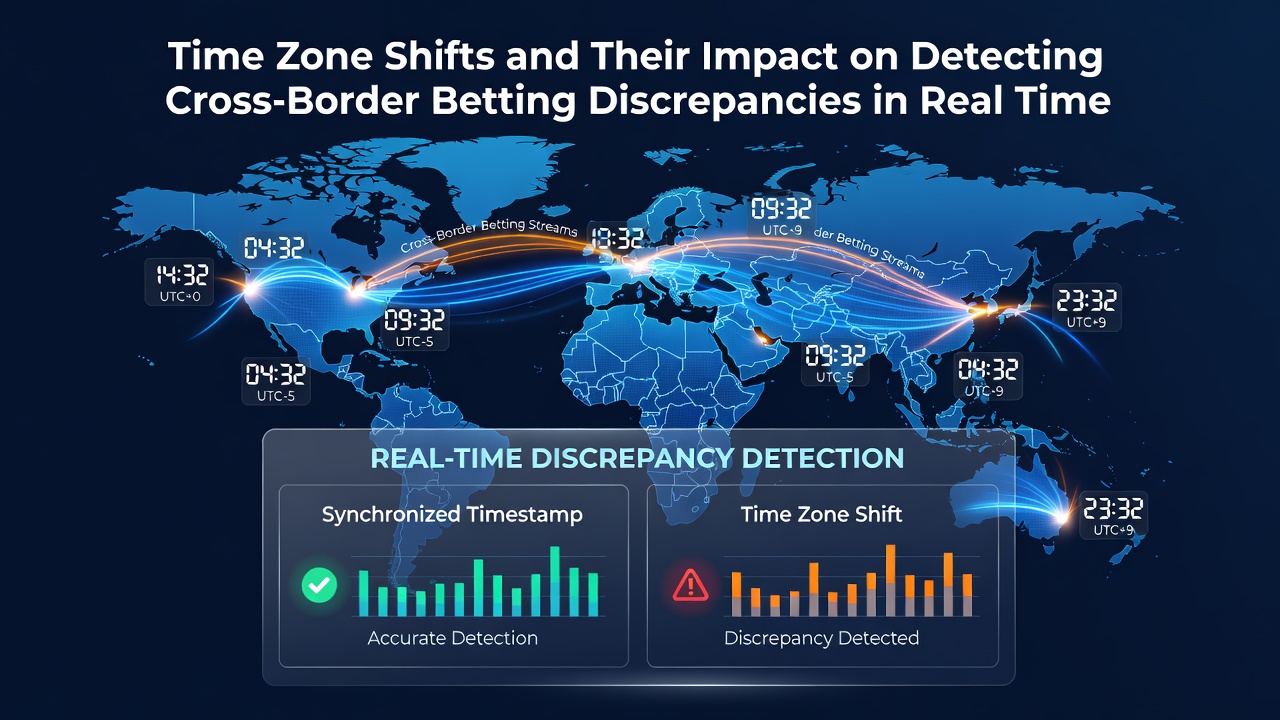
Time zone shifts create measurable effects on how betting platforms update odds across borders, and these variations influence the speed at which discrepancies appear in data feeds monitored by scanning systems. Markets operating in Asia, Europe, and the Americas maintain separate server clocks that align with local regulatory reporting windows, which means an event occurring at 14:00 UTC registers differently depending on the jurisdiction where the bookmaker processes the update.
How Time Zones Shape Data Latency
Observers note that latency between a live sports outcome and the corresponding odds adjustment increases when bookmakers sit several hours apart in their operational zones, because data packets travel through regional hubs before reaching central monitoring tools. Research from academic institutions tracking financial market synchronization shows similar patterns where temporal offsets of three to eight hours correlate with temporary price divergences that resolve once all regional feeds reconcile. Those who monitor cross-border activity record that discrepancies often cluster during the overlap periods when one market closes its daily settlement cycle while another continues live trading, and this pattern repeats across major events such as tennis tournaments or football matches spanning multiple continents.
Real-Time Monitoring Complications
Scanning software must account for the fact that some platforms refresh their lines on fixed local schedules rather than continuous global clocks, which produces brief windows where an arbitrage opportunity registers on one side of the planet but not yet on the other. Data from industry reports compiled in August 2026 indicate that cross-border variance detection rates fluctuate by as much as 18 percent during daylight-saving transitions in North America and Europe, because automated systems calibrated to standard time temporarily misalign with adjusted feeds. Experts tracking these shifts point out that operators in Australia and Canada publish settlement timestamps that differ from those used in Singapore or Germany, forcing detection algorithms to apply dynamic offsets rather than static UTC references.
Case Examples Across Regions
Take one documented instance where a major tennis final concluded at 03:00 local time in Melbourne while European bookmakers were still processing the prior evening's schedule; the resulting delay in odds synchronization allowed scanners to flag a temporary mismatch that lasted eleven minutes before all platforms aligned. Another observed case involved an NFL game whose halftime line movement occurred during early morning hours in Asia, where several offshore operators updated their markets only after receiving aggregated feed confirmations from North American sources, creating a detectable gap that closed once the Asian servers caught up. These examples illustrate how the combination of event timing and jurisdictional clock settings directly affects the window available for identifying inconsistencies before they normalize across borders.

Regulatory and Technological Context
According to figures released by the Nevada Gaming Control Board, cross-jurisdictional reporting requirements in 2026 emphasize timestamp verification as part of compliance audits, which has prompted operators to publish more granular update logs that scanners can now cross-reference against UTC benchmarks. Industry associations in the European Union have similarly published guidance encouraging standardized time-stamping protocols for remote betting platforms, and this development reduces some but not all of the variance that arises from differing national daylight-saving rules. Researchers at institutions studying digital market infrastructure note that the adoption of atomic-clock synchronized servers has narrowed average detection delays from 47 seconds to 19 seconds in monitored corridors, yet residual gaps persist when one operator's jurisdiction observes a public holiday that suspends normal update cycles.
What's interesting is that these temporal factors interact with bandwidth availability across undersea cable routes, because data packets routed through high-traffic nodes experience additional queuing that compounds the base time-zone offset. Those monitoring the sector report that detection accuracy improves when systems incorporate machine-learning models trained on historical latency patterns tied to specific zone pairs, allowing predictive adjustments rather than reactive corrections after the fact.
Conclusion
Time zone differences continue to shape the landscape of real-time cross-border betting discrepancy detection by introducing predictable yet variable latency into odds-update cycles. Data collected through 2026 shows that operators and monitoring tools have adapted through enhanced timestamp protocols and regional calibration routines, while residual challenges remain during transition periods and holiday schedules. Continued refinement of synchronization standards across jurisdictions offers a pathway toward tighter alignment of global feeds without eliminating the underlying geographic realities that drive these effects.