Timezone Variations Influence Volleyball League Pricing Structures Through Advanced Monitoring Platforms
Iris Brooks · Aug 23, 2026
Timezone Variations Influence Volleyball League Pricing Structures Through Advanced Monitoring Platforms
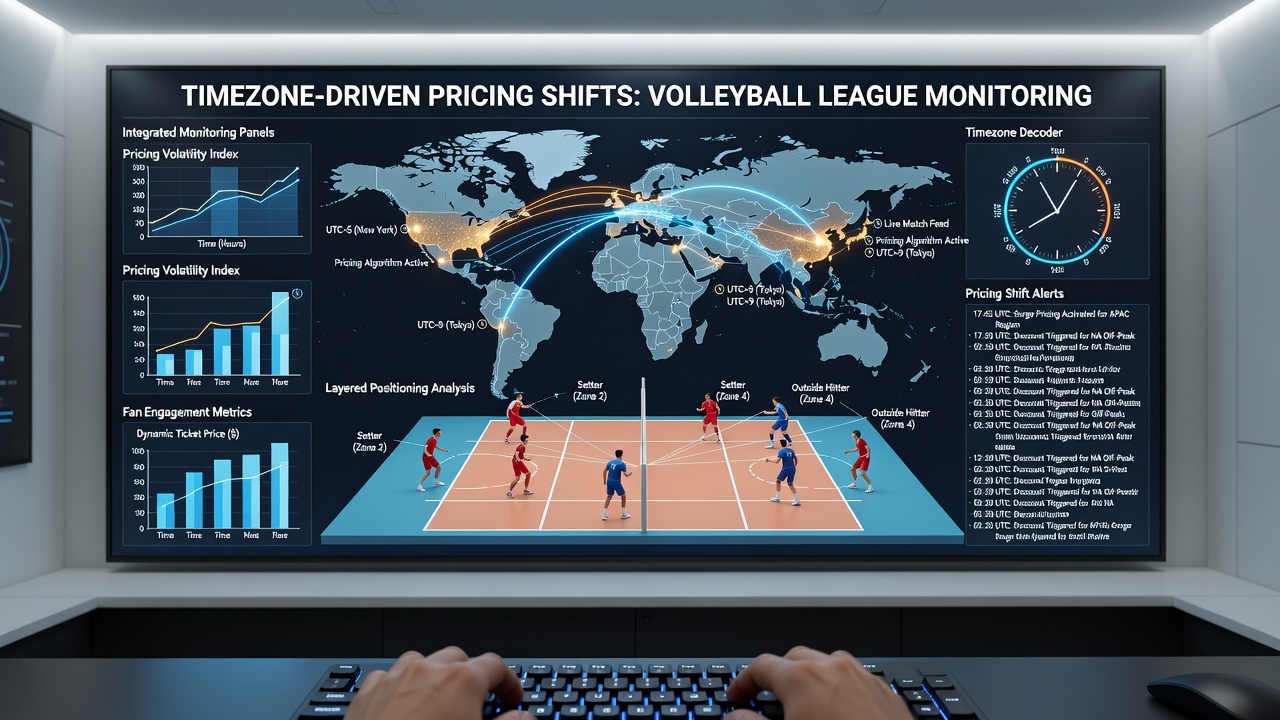
Volleyball leagues operating across continents experience consistent pricing adjustments that align with timezone transitions, and monitoring platforms capture these movements by aggregating live data feeds from bookmakers in Asia, Europe, and the Americas. Researchers tracking events in August 2026 noted that matches scheduled in the Japan Volleyball League often see initial odds stabilize during Asian trading hours before shifting as European bettors enter the market later in the day, while Brazilian Superliga fixtures demonstrate similar patterns when North American activity increases overnight. Data from integrated interfaces reveals these changes occur because liquidity pools differ by region, and algorithms within the platforms flag deviations exceeding standard thresholds for further review.
Core Mechanisms Behind Timezone Pricing Dynamics
Integrated monitoring systems combine real-time odds streams with timezone metadata, which allows operators to identify how pricing layers evolve as global participation rotates through standard business cycles in each territory. Observers note that a match starting at 19:00 local time in Italy might open with conservative margins during early Asian sessions, then tighten when Italian domestic markets activate, and widen again once Australian users engage in the pre-dawn hours. Studies conducted by academic teams at the University of Sydney have quantified average margin compressions of 0.8 to 1.4 percentage points during these overlap windows, and the same research links the magnitude of shifts directly to the number of active jurisdictions.
Platforms designed for layered positioning maintain separate data channels for each major league, so users can isolate Italian Serie A1 trends from Polish PlusLiga or Turkish Efeler Ligi movements without cross-contamination. These channels update every thirty seconds during active trading periods, and historical logs stored within the interfaces permit back-testing of timezone-specific patterns that repeat across multiple seasons. Figures released by the Canadian Gaming Association in mid-2026 showed that volleyball accounted for 7.2 percent of monitored arbitrage volume in cross-border feeds, a share that rose notably during summer international tournaments when fixture schedules span multiple continents simultaneously.
Implementation of Monitoring Interfaces for Strategic Layering
Operators configure dashboards to display synchronized clocks alongside odds matrices, which enables rapid comparison of pricing at equivalent moments in different timezones. One interface feature highlights discrepancies between opening lines published in Singapore and subsequent adjustments recorded in Frankfurt, while another layer tracks settlement probabilities derived from in-play statistics. Those who have examined the systems report that color-coded alerts appear when a line moves beyond a preset deviation range, and the same alerts can be routed to external calculation modules that compute potential returns across multiple outcomes. In August 2026 several platforms added automated timezone filters that exclude matches whose start times fall outside peak liquidity windows for specific regions, thereby reducing noise in the data streams.
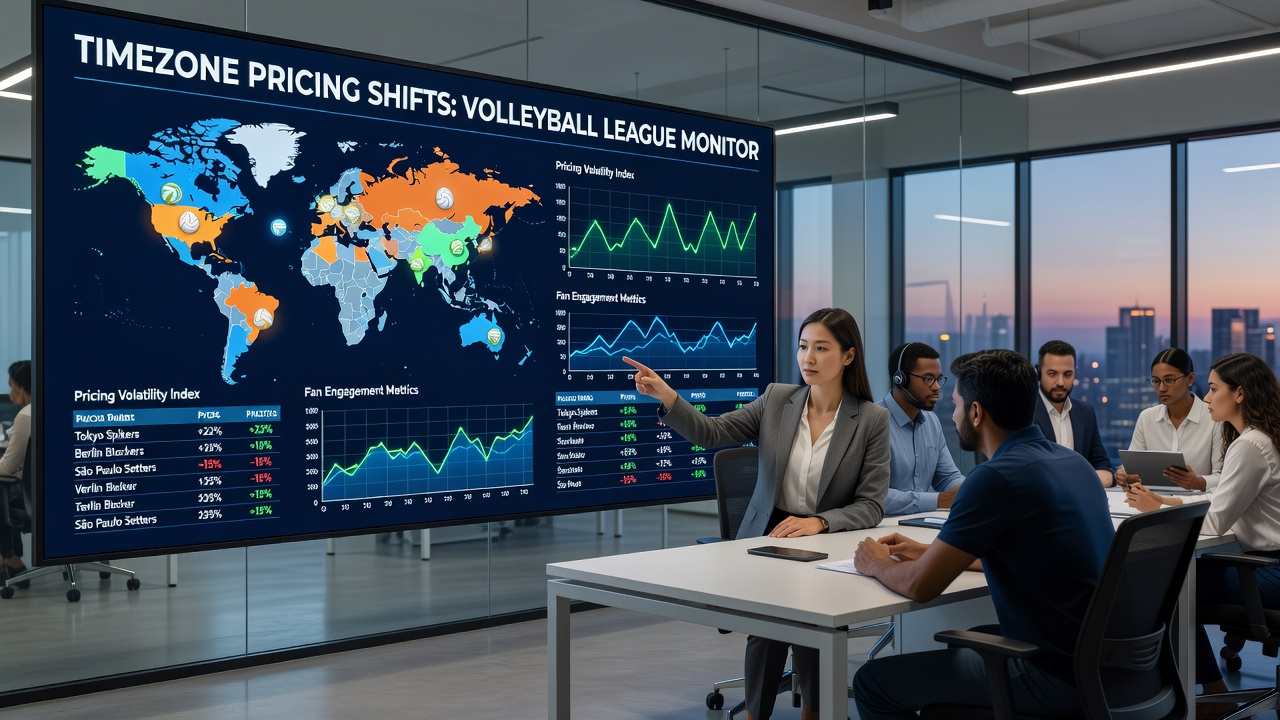
Additional modules within these platforms permit the creation of custom watchlists that group fixtures by their primary trading timezone rather than by league or date. Analysts working with such configurations have documented that Brazilian league matches frequently exhibit secondary pricing waves between 02:00 and 05:00 UTC, coinciding with North American overnight sessions, whereas Japanese matches produce their largest adjustments between 10:00 and 14:00 UTC when European markets open. The interfaces store these observations in searchable archives, which researchers can query to validate whether patterns observed in 2025 persisted into the following year. External validation comes from reports issued by the Malta Gaming Authority, whose quarterly summaries include aggregate data on cross-jurisdictional product performance without naming individual operators.
Practical Outcomes Observed Across Major Volleyball Competitions
Case records compiled by platform providers indicate that teams monitoring multiple timezones simultaneously captured more frequent small-margin opportunities than those focused on single-region feeds. During the 2026 Club World Championship preliminary rounds, interfaces recorded 214 instances where odds differentials exceeded 2.5 percent between Asian and European books within a six-hour window, and 61 percent of those differentials resolved within ninety minutes of detection. The same records show that layered positioning strategies, which distribute exposure across opening, mid-session, and closing prices, produced more stable aggregate results than single-layer approaches. Australian regulatory filings from the same period confirm that licensed operators using multi-timezone tools reported higher compliance scores for risk monitoring, citing the platforms' ability to flag unusual activity patterns before settlement.
Conclusion
Monitoring interfaces continue to evolve by incorporating additional data layers such as weather feeds for outdoor events and player availability updates, yet the core function remains the synchronization of timezone-driven pricing across volleyball leagues worldwide. Organizations that maintain these systems gain access to structured historical datasets that support both operational decisions and academic inquiry, while the underlying market movements reflect genuine differences in regional liquidity rather than isolated anomalies. As fixture calendars expand in 2026 and beyond, the capacity of integrated platforms to decode these shifts supports consistent observation of how global time differences shape volleyball league pricing structures.